
In this article
- How Long Does Local SEO Take to Work?
- What Affects Your Local SEO Timeline?
- How Long Does Local SEO Take for a New Business?
- How Long Does It Take to Rank on Google Maps?
- What to Expect in the First Three Months of Local SEO
- How to Know If Local SEO Is Working
- Why Is My Local SEO Not Working?
- Can You Speed Up Local SEO Results?
- Conclusion
You’ve updated your business profile, improved a few website pages, and started asking customers for reviews. Now you want to know when the phone will ring more often. So, how long does local SEO take? That’s a fair question when you’re paying for the work or doing it after closing time. For help setting priorities and tracking progress, explore our Local SEO Services. Before setting a deadline, decide what success means: being easier to find, receiving more qualified inquiries, or booking more jobs. Those aren’t the same milestone. Here’s how to judge the work without expecting overnight results or accepting “just be patient” as the only explanation.
How Long Does Local SEO Take to Work?
Think in weeks for reviewing early changes and months for assessing broader search improvements, not a guaranteed finish date. Google says website changes can take anywhere from hours to several months to affect search results, and recommends waiting a few weeks before judging many updates. That guidance covers website search performance, not a promise about Maps rankings or new customers. A corrected phone number may help as soon as it becomes public; more bookings require people to find you and choose your business. A three-month review is a useful checkpoint, not a deadline for success. Agree on what you’ll measure before work begins.
What Affects Your Local SEO Timeline?
Start with the factors affecting local SEO results that you can actually inspect. Compare an established repair shop with a useful website but incorrect business hours to a shop whose pages barely explain its services. The work involved is different. Why does local SEO take so long in some cases? Part of the answer is the gap between what exists and what needs fixing. Website access and the speed of approvals also belong in your planning. If a service page sits unpublished for six weeks, those weeks aren’t evidence that the improvement failed. Track when each change goes live, not just when you signed a contract.
How Long Does Local SEO Take for a New Business?
Local SEO for new businesses often means building the basic pages and profile information that an established company already has. Start by making sure customers can understand your services, location, and contact options. Google also needs to discover and process your website pages. A requested crawl can take days or weeks, and requesting one doesn’t guarantee inclusion in search results. That is different from ranking well. Finding your website by name isn’t the same as reaching people who don’t yet know you. Set early goals around a usable website, accurate business details, and tracking inquiries. There’s no need to invent a fixed waiting period simply because the business is new.
How Long Does It Take to Rank on Google Maps?
A verified profile doesn’t reserve a top position. Google mainly considers relevance, distance, and prominence: how closely you match a search, how near you are, and how well-known your business is. Reviews and links are part of that picture. A business might appear for its own name yet remain hard to find for “emergency plumber.” Google’s local ranking guidance offers no guaranteed timetable for reaching the top. Check visibility for relevant services across the areas you actually serve rather than judging everything from one search at your desk. Record the search term and location each time so comparisons are useful. Improving a profile also doesn’t remove the distance between your business and a customer.
What to Expect in the First Three Months of Local SEO
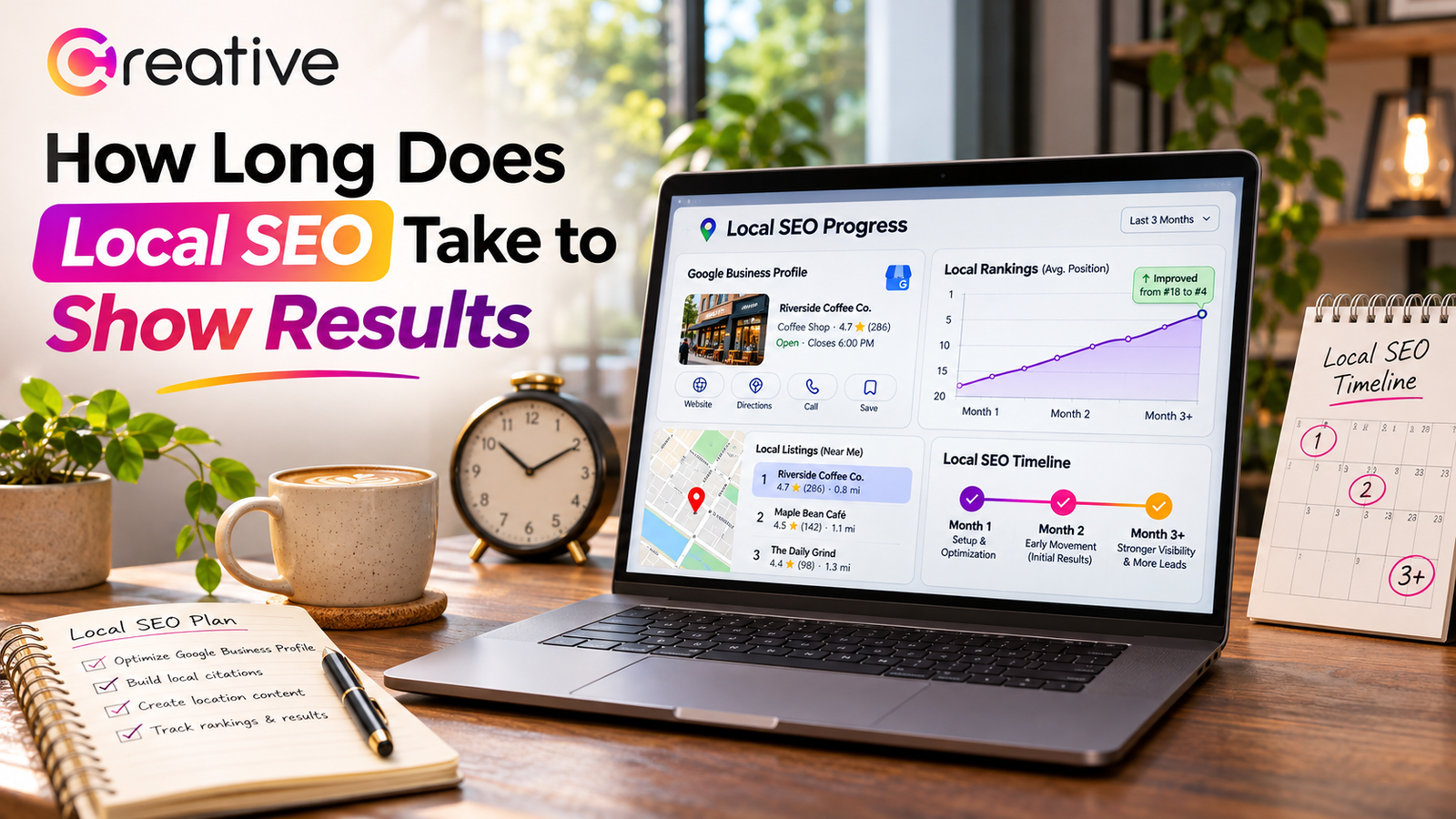
Use the first three months as a work-and-review plan, not a promise that rankings will rise on schedule. In month one, record existing traffic and inquiries, check profile access, and identify inaccurate listings or website problems. During month two, complete priority repairs, improve service pages, and confirm that published details are correct. Establish a consistent way to ask customers for honest reviews. In month three, compare results with your starting point and check the quality of inquiries. Agree on who will track calls and bookings, too. Without that responsibility assigned, a better search report may still leave your original question unanswered. Keep a dated record of local SEO progress so you can connect observations with completed work. Your report should explain what changed, when it went live, and what happened afterward. A list of finished tasks is useful, but it isn’t proof that those tasks brought in customers.
How to Know If Local SEO Is Working
To decide how to measure local SEO results, start with inquiries and bookings, then use search data to explain the trend. Google Business Profile performance can show website clicks, direction requests, and call-button clicks. Those calls are taps, not proof of completed conversations. The reports can also include paid advertising activity, so don’t credit SEO for every increase. For your website, Search Console shows search impressions, clicks, and the queries people used. Compare monthly trends and match them with actual leads where tracking allows. Record whether those leads needed your services and lived in your service area. Ten suitable inquiries can tell you more than a traffic increase from people you cannot serve.
Why Is My Local SEO Not Working?
A quiet month needs investigation, not an automatic request for more time. Start by separating visibility from inquiries. If search traffic has stalled, check whether important pages are accessible to Google and whether demand for your service has changed. Seasonal slowdowns can affect traffic without proving the work failed. If visits are rising but inquiries aren’t, test your contact form and read your service page on a phone. Is it obvious what you offer and where you work? Ask whoever manages the campaign to explain the specific problem, show the evidence, and propose the next change. More waiting is not a diagnosis.
Can You Speed Up Local SEO Results?
You can remove avoidable delays, but you can’t force a ranking deadline. Provide account access promptly, approve accurate updates, and publish the service information customers need. Repeatedly requesting Google to revisit the same page won’t make it happen faster. The pieces also need to work together: fixing a profile won’t repair a broken inquiry form. Our guide, What Is Local SEO and How Does It Work for a Small Business, explains that wider picture. Use it to check whether your plan addresses more than one listing. Then prioritize the biggest obstacles, assign responsibility, and record completion dates. Spending your week on minor wording changes while an important service page remains unavailable is the wrong order.
Conclusion
Local SEO for small businesses needs patience, but it also needs accountability. Start with a record of where you are, agree on useful goals, and review progress at regular intervals. Expect evidence of completed improvements and an honest explanation of what the results do or don’t show. Don’t treat a higher position on one search as proof that the investment is paying off. For help setting priorities, talk with Creative Solutionss about a plan built around your business and service area. The goal isn’t simply to wait long enough. It’s to learn which changes bring suitable customers closer to contacting you, then improve from there.